Goaling Better 2.0 is about a better way of setting and actually achieving goals that I have been putting into practice over the last few months – and with great success I might add. At its core, it’s about making the required habits and behaviors for accomplishing a goal, manageable and repeatable.
BTW, this is version 2.0 because as I was trying to think of a name for this post, I realized that I had already used the title for a previous post that I wrote about goal setting as we were preparing to enter 2020. (And what a wild ride its been since then, huh?!?)
So what am I doing now to make my goals, and the steps involved, more manageable and repeatable? I’m downgrading them. Did you just cringe a bit or see it as less of a win when I said downgrade? Well don’t. Downgrading naturally has a negative connotation, but I don’t think it’s a bad word. It simply carries the weight we give it. And in this case, I choose to see it as a helpful tool that creates a pathway to more consistent success. Slow and steady wins the race because its about consistency, and consistency is the key to results. Manageable + Repeatable = Consistency.
I’m sure you’ve heard the acronyms SMART as it relates to goal setting. (Specific, measurable, attainable, relevant, time-based) and while each of these elements are important, for me manageable and repeatable are even more important. So now when I break ground on a new goal, whatever is my initial landing spot for that goal, I immediately think about the 1-stop downgrade. This serves as a bit of a reality check for me and also provides me with options so that I can adjust (or #livingflexyfit ) as needed.
Solving the Laundry Conundrum
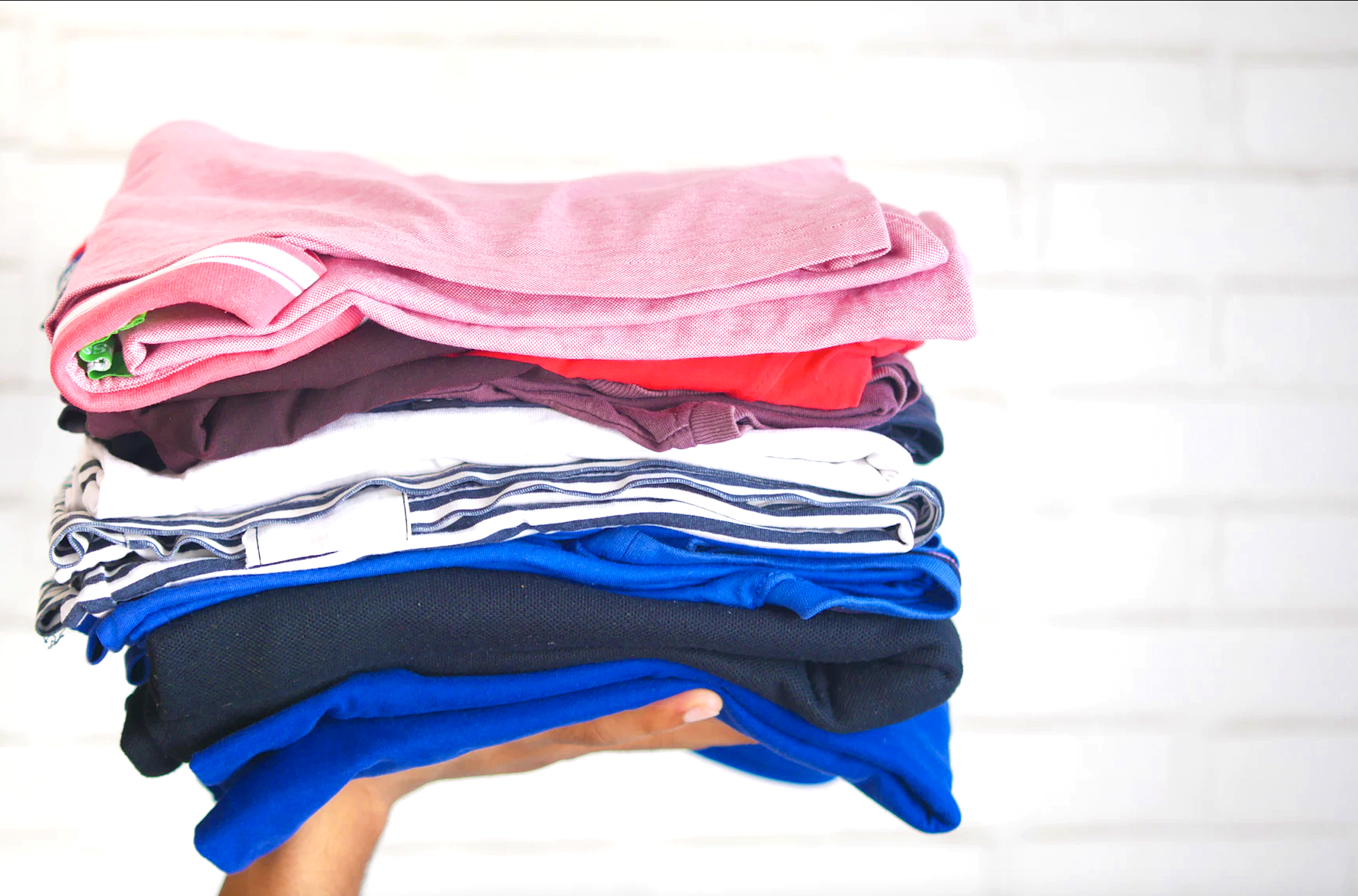
I ask myself, will I really be able to do this everyday for the rest of my life? Or if every time an excuse may arise, will I take it? For example, I’m good about washing clothes. Terrible about putting them away. I’ve had months of clean clothes laying about for months at a time more times that I can count. And whenever I did finally go to put them away, it took forever because there was just show much. So I decided I wanted to get better about putting my clothes away sooner. Initially decided that I should put them away as soon as the dryer buzzed. FAIL. Half the time I do laundry it’s on my way out the door because #ProductivityWhileImOut is a major win. But not being home meant missing that call to action provided by the dryer buzzing. Then I’d get home and forget all about the clothes. Or if I was home, I was probably working and even less likely to be called away by a dryer and non-essential work.
So next I decided I’d put them away as soon as I took them upstairs, well the problem with that is I could leave the clothes in the laundry room and never take them upstairs and actually put them away. I finally hit upon a recipe that worked with I met myself and the clothing chore in the middle: as soon as I take them out of the dryer I take them upstairs and put them away. BINGO, for whatever reason, this works for me. I think the act of physically taking my clothes out of the dryer means that I’m already doing clothes chores, so I might as well finish. Plus when I do take the clothes out that means that I actually remembered that they were in the dryer and also that I probably have a moment of free time if I though about them and took them out. This also means that I have a max of 2 loads of laundry, instead of months of laundry. So putting my clothes away takes 20 minutes or less…way better than a 1 hour+ clothing marathon.
I know you’ve heard the saying, “if you want to floss regularly, start with flossing one tooth.” It’s so overused, but its so true. You really do need that spark and manageable approach. And if you haven’t read it, you should definitely check out the book Tiny Habits by B.J. Fogg – it’s an incredible gem! I’d love to say that I read it right before I made the clothing change and it changed everything. But the truth is I read it years ago when it first came out. maybe I implanted some of the things I read, maybe I didn’t. But now, years later, those lessons are coming full circle and making so much damn cents that they actually made change!!!
I share this to say that goal setting has to be manageable and we have to be agile about it until we find a working recipe that works for us. There is no one-size-fits-all for everyone, or even for the same person with different situations. Everything will need a tweak. Everyone will need a tweak. You have to keep tweaking until you find what works for you.
I leave you with these questions to ponder:
What is one thing you want to do or get better at doing that you’ve had trouble maintaining?
What about it prevents you from doing it?
What is a goal you can set now and what is a 1-stop downgrade to make that goal even more manageable and repeatable?
Thoughts, questions, feedback? Or just want to share? Comment below or feel free to email me anytime!
I’ve gotten this message and similar ones (Are you okay? Where you at? Where you been?) consistently over the last year. I feel lucky that people looked forward to seeing me pop up in their inbox and having more regular blog posts, and also bad because I feel like I fell off. Yea, you read that right, I FELL OFF.
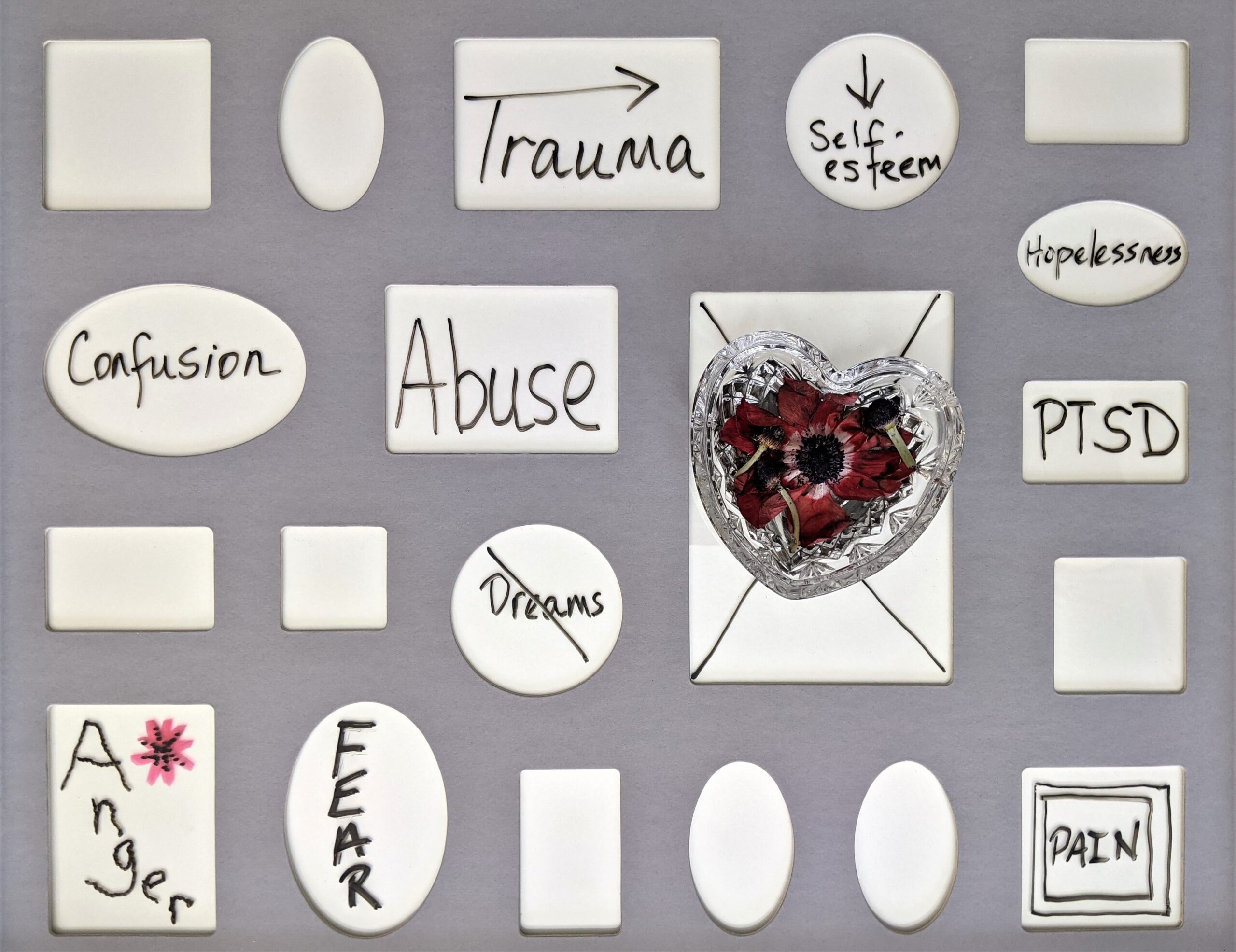
The truth is: Life Happens. And despite my superwoman tendencies and desire to be invincible, the truth is I’m human. Burnout happens, life happens, injury happens, stress happens, trauma happens…and if, and after, you survive all of that then recovery has to happen.
During these times, for some, nothing happens. They cease to do anything. Me? I show up for those I’m committed to, maintain the essential commitments and responsibilities, and then everything else kinda falls by the wayside.
So many projects and dreams just put on hold and frozen in time.
The FlexyFit blog was one of those things sadly, along with my first real book, new ebooks and workbooks, master classes, another self-care social, a handful of new trainings, my personal pole/aerial practice, desire to become a USPSF judge, and more. So much of what I wanted to do and had planned to do just stayed in the orbit of my brain because I zombied out on myself, on life, on my goals, on my voice.
And despite my regular preaching of self-care and boundaries to others, I failed myself. I failed to fully and regularly practice what I preached and this took a serious toll on the quality of my life.
Then Something Happened and I Woke Up
Something happened though, I’m not really even sure what or when, but something happened one day where I just snapped out of it. I did that “Self Pep Talk”. Self: It’s time to get your body, your mind and your shit together. You know the equation to INSANITY way too well and you don’t even like math!
While it hasn’t been overnight and it certainly hasn’t been easy, I’ve slowly been finding my way back to ME. I’ve spent the last year reestablishing boundaries, getting to know myself again, carving out me time, protecting my energy, using my voice loudly and proudly, removing problematic clients and people from my life, eliminating unnecessary negativity and building a better environment that I can thrive and be happy in.
A big part of me coming back to me, is me coming back to you. Which is why you’re reading this now. As I return to my path, my mission and my vision, I do so slowly and methodically. I’m not coming back with any promises of anything other than doing the best that I can, when I can. And trying to be a better example to you by being better to myself.
If you can relate to any of this. If my struggles speak to you, drop me a note below or shoot me an email. Let’s connect, share and support each other. You are to alone.
Next post we’ll talk about one of the things that’s helped me on this new self- journey which is setting realistic expectations and the new way that I set (and achieve) goals.
WOW, this year literally went by in a flash. Can you believe we are on the edge of 2022? I must say that while the last few years have been full of cray, unpredictability and constant adaptation with everything going on in the world, it’s somehow led to a lot of growth. And I am thankful for the personal and professional growth I experienced, and I am looking forward to putting all of that growth to good use to be a better woman, a better coach and to continue helping you all reach your goals.
The greatest lesson I learned in 2021 was the value of my peace. There is no person, family member, client, opportunity, goal or amount of money that is more important than your personal peace and your ability to sleep at night.
Learning the value and importance of my personal peace helped me get clear on what really matters, who I am and who I want to be. I happily depart 2021, committed to leaving the baggage here. In 2022 I will continue to eliminate anything and anyone that interferes with my happiness and peace of mind.
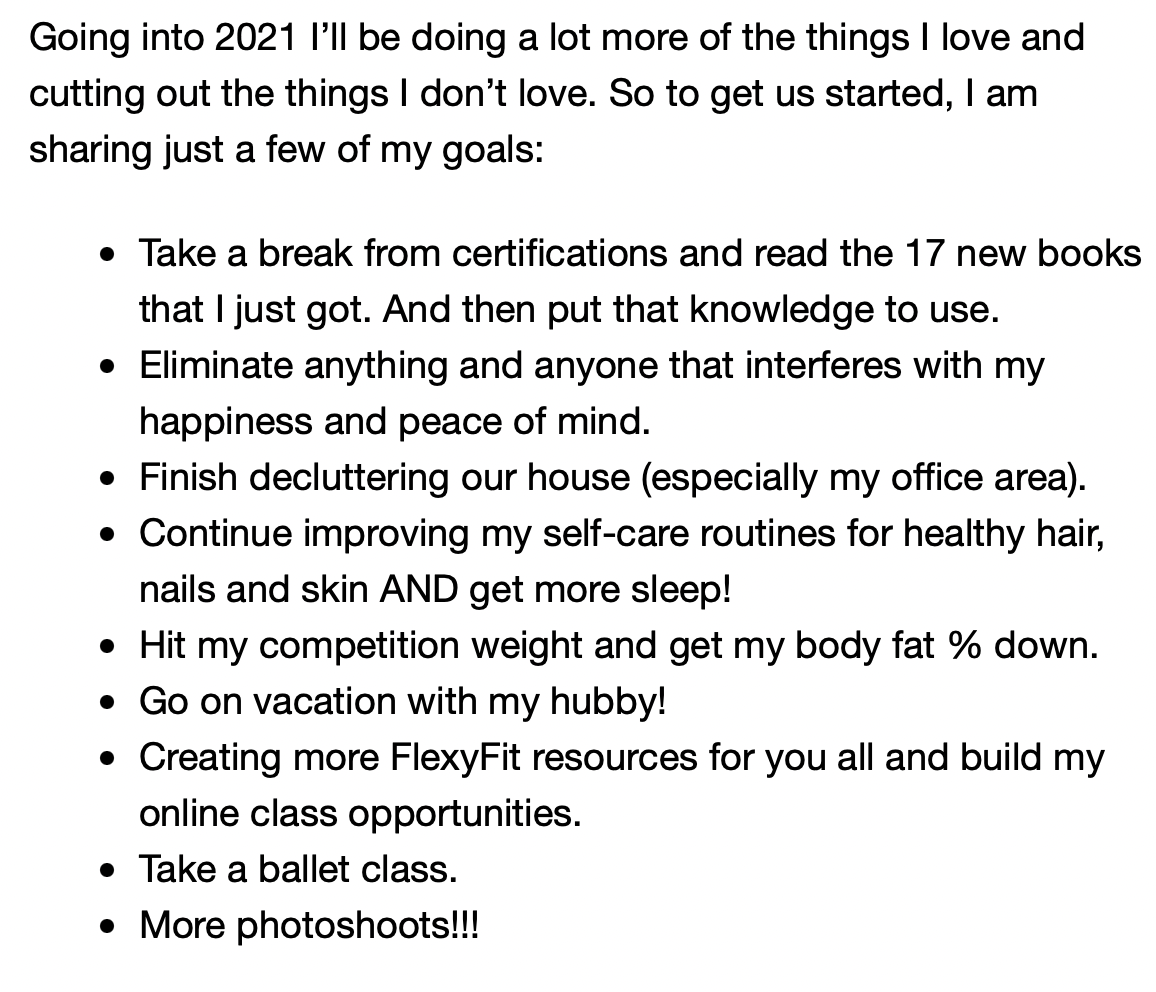
This time last year, I sent a newsletter sharing my 2021 goals with you. I want to be transparent and review my results, while also sharing some of my intentions for 2022. Check out the screen capture below of my 2021 goals that I shared.
I’d have to say that I was mostly successful in achieving my goals, with a only a few tweaks/fails. One area that I surpassed was that I actually read 31 books..hoping to make that 32 by 11:59pm on 12.31.21! While reading was a focus, I did still manage to get a few new certifications, including Trapeze, Human Movement Specialist, Laypryders and Twerk.
I definitely made process eliminating clutter in my life and house!
On the vacation front, that ended up being a staycation, but I’m still going to claim it as a win! Ballet ended up being a Floor Barre class, but I met the most amazing instructor that I am happy to now call friend!
My Basic As Fuck Series has expanded from static pole basics to now have modules for Spin Pole, Floorwork, Conditioning AND there’s more on the way.
The only goal that I did not meet was my body goals. My weight fluctuated throughout the year around injures and life. What I did accomplish with my body, is some much needed vein removal treatments, which has already made a huge difference in the quality of my day-to-day life. I have two procedures left, and then I’m looking forward to getting back in the gym and hitting it hard, so that I can still accomplish my body goals.
A few other highlights include:
• Being a selected performer for the BGP + PSO #AmplifyMelanatedVoices Showcase Fundraiser
• Being a selected performer for Devour ~ A Night Of Pole & Dance In Place! Showcase Fundraiser
• PerformingTrapeze in two showcases with my Fly Black Aerialists family.
• Joining the Shine Fitness Studio team
• Working on my mental wellness
So what’s in store for 2022?
I plan to be come a Master Nerd and Body Sorceress and find even more ways to use my knowledge, experience and expertise to help all of you reach your goals.
• Read 45 books
• Continue developing the Basic AF Series
• Body goals: get my weight down by 15lbs, muscles popping and move better.
• Make my training space the most amazing space ever!
• Learn Rope, Straps and grow my Hammock skills
• Develop more courses, guides and resources to help my FlexyFit community with their goals.
2022 is literally right around the corner and this is the time where most of us usually start to list out things we’d like to accomplish in the next year. While personally I don’t believe that you have to have a major symbolic moment to start on new goals, I can definitely appreciate the rejuvenating effect something like “The New Year” can have on people. I want to take a moment to think about why some people are successful in reaching set goals, but others are not.
I think it comes down to being specific and realistic. It’s very easy to declare a desire to have a million dollars, meet a celebrity, get a good job, or the all time favorite “get in shape”, but what do any of these really mean and what do they look like? Meaning, how will you know when you get there? If we start off with a goal that is vague and not realistic, we will be less likely to keep pressing when times get tough, and we’ll be even less likely to reach that goal because it’s just a mental blob.
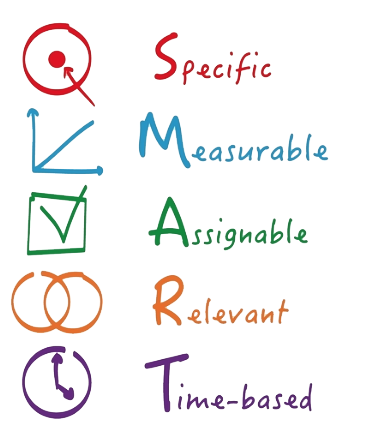
Whatever you set out to do in the near year, I want to see you be successful. So I want to share something that you’ve probably heard of a million times before, but I hope that if you’re not already using it then this time around hearing it will make al the difference for you. This is what successful people do when it comes to setting goals: they follow the SMART formula.
∙ Specific. You want to be precise about your goal. What it is and what it looks like. Instead of saying you want to loose weight, be specific and say you want to lose 15 pounds. Answering the following questions can also be helpful in this step. What do I want to accomplish?, Why is this goal important to me? Who else is involved?
What other resources or limits are involved?
∙ Mesurable.This is a way to track your progress. It may include answering and reflecting on things like: How much? How many? How will I know when it is accomplished?
∙ Achievable. Make sure that your gaol is realistic and reasonable. It should be something that is possible to accomplish with your current skills, reach, access, abilities, etc.
∙ Relevant. Why does this goal matter to you? How is it connected to you. We are more likely to be successful if the goal means something to us on a personal level.
∙ Time-bound. There needs to be a specific window of time for accomplishing your goal. It could be a specific day of the year or an interval of 30 days, 60 days or by the end of the year.
A few additional tips when it comes to setting goals:
1. Don’t skip any of the SMART formula steps. If you follow this formula you’ll know what you set out to do will be achievable so you have a higher chance of sticking with them and succeeding.
2. Be sure to document your progress towards your goals throughout the year with photos, videos and/or journaling.
3. Make sure you celebrate every little milestone along the way.
What goals have you set for yourself? Comment below or email me and let me know.
If you follow the formula above, it’ll serve as a map for achieving your goal and evaluating your progress along the way. And remember, no matter what you set out to do this year on the ground, in the air or in life, I am here to help!
Need help setting goals or creating a training routine? Let me know and we can set up a coaching session to help you with setting goals and making an action plan.
Ahh the holidays! A time full of family, friends, fun and of course food. But what happens when tradition and obligation conflict with your fitness goals and current lifestyle, and threaten your hard earned progress?
This is a question that I get often from clients. It’s also a situation that I’ve dealt with myself every year since starting my wellness journey. And it can be a tough, tempting and uncomfortable situation at times. One one hand, you may want to indulge, but on the other hand you don’t want to sabotage yourself over a few meals and desserts.
The true is that it’s more than just a few meals. That 2-7 day distraction (multiplied by Thanksgiving and Christmas) is enough to railroad your progress – if you let it. It’s been said that many people easily put on 8-10lbs (that they fail to lose) during the holidays and in just three years that’s 24-30lbs of weight gain. Now imagine what that looks like in 6 years…or ten!
I have good news for you! Despite holiday meals and vacations, it IS possible to stay on track with your fitness gains. I’m going to share my helpful hacks on how to combat calories and avoid social sabotage.
The harder approach: • Think about what means more to you? A single meal or YOUR BODY & GOALS? It can be hard to stand up for your lifestyle change, especially when the person on the other end is a family member. At the end of the day though, you have to remember that it is YOUR life, YOUR body and it’s been YOUR time and sacrifices, so only your opinion should be the one that matters.
• Don’t allow someone else’s insecurities, weaknesses or opinions control you. Most people give your their opinions based on their very own limitations that they live by. Don’t allow what controls them to control you. Their goals aren’t your goals.
• Speak up and stand up. It’s okay to put your foot down about what you will or won’t do.
• If you want to take your own (healthier) food, DO IT.
• Understand that its perfectly okay If you want to eat less of something or if opt out of going for seconds.
• Understand that in the long run, you will feel no less satisfied by not eating something [that’s not a part of your current eating lifestyle], but you are likely to feel disappointed if you gave into a day of crazy calories.
• KNOW that it’s okay to go against the norm. This year was my first Thanksgiving as a vegetarian. I explained my change in dietary preference and stood my ground. I had my fill of sides and desserts (without overindulging), took nothing home with me and was still able to enjoy my time with my family.
So I know what you’re thinking, all of those things are hard to do and you may not be ready to deal with the conversations or backlash. And I admit, being able to stand up for your life choices and lifestyle changes can be hard. It takes time to learn not only how to stand your ground, but to truly know that it’s okay to live life your way. So if you are in need of a few “non-confrontational” hacks here ya go:
• Drink LOTS of water. A full glass of water before you eat your meal will help fill you up. Water intake tip: you should be drinking 1/2 your body weight in ounces of water each day.
• Portion control. Each portion should be about the size of your fist or cupped hand.
• Chew, chew and chew some more. Thoroughly chewing your food slows down the eating process, fills you up and leaves you more satisfied.
• Eat a healthier meal BEFORE you attend your social event so that you can tell them you already ate and/or you’ll eat less while there.
• Share the gift of healthier eating and prepare a healthier dish to take with you and share.
• Eat less. If your weakness is macaroni (like me) then get your fill of that and skip out (or significantly cut portions – down to 1/3 or 1/4)some of the other foods that don’t bring you as much savory-joy.
• If its a family dinner then you typically know what foods you traditionally have. You can use this knowledge to plan out your caloric intake for the day. Adjust your earlier meals to allow for that increase in delish you’ll be experiencing later.
• DO NOT TAKE ANY LEFTOVERS HOME WITH YOU.
* This post has been updated from its original publish date 12.20.2018 *
Original Title: How to Stay on Track During the Holidays
Updated Title: Helpful Hacks for Keeping Your Fitness on Track During the Holidays
Maybe some of you have heard that after 7+ years Freestyle Friday is back! But why does it matter? Why did I bring it back? What does it help, especially for someone like me that has 10+ years of experience under their belt? So glad you asked! Freestyling is an excellent way to monitor your progress as a dancer. It allows you to pick up on patterns, habits (both good and bad), practice your ability to connect movement, develop your movement creativity and think on the spot. Oh, and in the case of Freestyle Friday, discover and practice movement with different music types.
I brought Freestyle Friday back for a few reasons:
For myself (also the very reason why I started it). I needed something that forced me to push myself and to get moving again. I love teaching, competing and performing, but they can be a (a very rewarding) energy and creativity drain. Usually when I find myself at a sticking point, I compete or learn a new apparatus. This time I decided to go another route and revisit an old friend!
Others wanted and supported the comeback!
I remembered my WHY! I initially opened up Freestyle Friday and started my teaching career to make a positive impact on the pole community AND to help others on their pole journey. Bringing back this tool and resource is a way for me to continue doing what I set out to do – and to also expand it to the Aerial community.
What Does Freestyling Help?
In addition to the things I’ve already shared, I believe that Freestyling helps you connect with your body. You learn how to listen to yourself, trust yourself and allow yourself to try new or different things without fear. Even for someone like me, that has a lot of experience under her belt, I still learn so much with free styling. I learn about my movement style and preferences, current movement/style influences, I see how I protect past and current injuries, I can see what tricks I’m most comfortable with and that are my go-to moves, I can see the moves that I may be currently working on or teaching. It’s an endless observatory!
Purposeful Evaluation
The key is not to judge yourself harshly or speak negative about your performance. The goal is simply to observe your movement. If you want to constructively critique your performance for the purpose of growth and improvement then here are 11 questions that you may consider asking yourself:
1. What did I do well?
2. What could I do better?
3. If there was a “mess up” did I keep it moving or did I allow that to affect my momentum and confidence?
4. How were my lines (watch for micro bends in the knees and flexed feet)
5. Could I see myself thinking, planning or reacting?
6. Are there moments of musicality that I missed? If so, what were they?
7. Was there any moments of musicality that I absolutely nailed? If so, what were they?
8. Did I incorporate anything I’ve learned or practiced recently?
9. Did I see/feel any improvement from my last freestyle
10. What would I like to use in my next performance/freestyle?
11. How did my body feel during my dance?
So let’s see some freestyle learning and observation in real time! Below are three of my Freestyles. These three freestyles showcase me in three different elements.
1st Freestyle Friday (My FIRST EVER Circa 2012)
This first freestyle in 2012 is me at the beginning of my Freestyle journey, still very uncomfortable in my movement, yet fairly confident about my ability level. My goal was simply to push myself to move. As I watch the video now (for the first time in 5+ years) I notice a lot of bad habits, choppiness and a lack of awareness in my body and movement (as seen in my lines).
Freestyle Friday Reboot: Week 1 (October 2021)
This Freestyle from yesterday (and the first Freestyle Friday reboot) features a more experienced ME, but also a me that is out of her element. This song, which was a fun spooky number, was a lot faster than anything I would normally choose to dance to. In addition to trying new movements, I’m coming off of an injured hip, so I keep kept it mainly floor-based and grounded movement.
I see maturity and awareness in my lines and movement, but I can also see a lack of connectivity to the music. I appreciate the elements of surprise if my face when I felt a moment of connection or a “that felt cool moment”, and I see less of a focus on throwing all of my “best” or “hardest” tricks, and more baseline movement.
I feel like this represents the performer that I am at heart. It’s me in my element, and even though I did not pick the song (or know what they were going to play) it was a song that I was familiar with. The slowness and familiarity of the song allowed me to move in a way that was natural for me. Like my previous freestyle, it wasn’t about throwing a bunch of hard, tricky moves (although it was about putting on an enjoyable show for the audience).
I see more moments of musicality, awareness of my available space and proximity of the audience, smoothness and connectivity in my movements, clean lines, and definitely a change in my body and my flexibility – especially compared to my first 2012 freestyle.
In Conclusion
Clearly there’s plenty more that I could appreciate (or pick at), but my goal was simply to share the growth that can occur with practice, and the value of filming your journey – so that you’re able to go back and compare your movement gains.
And I love Freestyling because it helps you step outside of your comfort zone. It is in these outer limits that you discover new music, new movement and new ways of connectivity. This is when and where growth occurs – in the discomfort, the unknown and in having to do something different.
If you have thoughts or a freestyle journey to share, please do so below! I’d love to hear from you!!! AND if you want to join in on the Freestyle Friday movement, learn more here.
* This post has been updated from its original publish date*
When I started FreeStyle Friday I never imagined how quickly it would grow. The support from studios, pros and students has just been incredible. I am thrilled to hear from so many instructors and studios that have been inspired to start a FreeStyle Friday class at their studio.If you’re thinking about scheduling a weekly FreeStyle Friday class or jam session, I have a few pieces of advice to share:
Getting Started One of the hardest things about free styling is the lack of structure and direction. Like seriously, how do you freestyle when you don’t know how to freestyle? Not knowing where to start or what to do can be frustrating and is a common feeling amongst new freestylers. Freestyling doesn’t mean that you go into your movement empty handed or empty-brained. There are so many things that can serve as the base for your movement: A specific trick or combo you want to execute A body part you want to accentuate A mood, feeling or color you want to emote A story you want to tell Start by asking your students this question or offering them one of these starting points.
Review After your warm up, you can explore some sexy basics, transitions, previously taught tricks or combos. Ask them to play around with the moves and try them on like playing dress up. Mix and match the movements to see what feels good. This will not only offer students a starting point but it also will help with getting all of their muscles warmed up and engaged.
Class Format My suggested format for FreeStyle Friday classes is that they should be minimally structured classes that resembles a guided open pole session. This allows for a little bit of instruction and then plenty of free time for students to pole around and explore on their own. Most likely you’ll have a mixed clas with a variety of skill levels, so it’s always a good idea to keep it on a level and focus that everyone is comfortable with.
DJ, Play it Again Put the FreeStyle Friday song for that week on repeat. (Students can tune in and out during warm up and initial instruction.) This will introduce the song to those that haven’t heard it and allow everyone to get a feel for the music and come up with some moves they want to incorporate. Encourage students to listen and look out for the highs and the lows in the song. Having a solid music map will help in putting in and connecting moves, and hitting those musicality and accent points.
Recording Always encourage students to record their movement. Recording is important because it allows you to track your progress. Even if the video is never shared or posted, having it to refer back to, and to learn more about your body’s movement is priceless. Give students 2-3 chances to record as a group, but also encourage them to record individually. Often we may feel more comfortable recording as a group, but what can happen is that we can stop focusing on our own dance and instead tune into what others are doing and mirror or try to keep up with them. Or after the recording when we are reviewing, we often make the mistake of using that time to compare ourselves to those that we were dancing with/nearby instead of critiquing ourselves. It’s great to work as a group but I want to emphasize the underlying goal of personal growth.
You’ll also have students that are shy and won’t want to record. Encourage them, give them a little push but don’t force them and don’t single them out. Asking them to join you for class next week will make them feel more connected and encouraged…and maybe next week they’ll feel more ready. Also, you can let students know that it’s OK to record and NOT post. Just because they record that doesn’t mean they have to post. At the end of the day my goal is just for everyone to monitor their progress, identify what they do well and where to improve so that they can see their growth. Keep the recordings to themselves or sharing with instructors or FSF admin is quite all right.
Options Options can sometimes ease the mind and help students relax enough to get through their dance. And I know from experience, once you get through that first dance, it gets easier and easier from there. So to help with this, remind them that they are welcome to change things up in any way that works best for them. This includes skipping pole work and doing FreeStyle Floorwork, FreeStyle wall work and FreeStyle chair work (let them know they don’t have to be on the pole). For those that do want to incorporate pole work let them know that they don’t have to invert or do any hard tricks. Working on spin combinations or putting that often forgotten left side to work is always a great option!
Reminder to breath Breathing is key to movement. Very often in pole and aerial, students hold their breath. I find that many associate the ability to hold a trick with holding their breath, when in reality you need to breath properly in order to execute a move. Maintaining controlled breath takes practice, so feel free to even incorporate some breathing practices into class.
Less Is More Doing too much can be problematic. Not only can it look and feel rushed or sloppy, it can affect your breathing, balance, coordination and flow. Let students know it’s better to do 3 tricks that they can fully extend and hold, with a clean entrance and exit, as opposed to sloppily doing 6 rushed tricks.
Musical Poles A fun way to keep students on their toes is to play musical poles by having them rotate and switch poles throughout the song. This encourages more movement and variety in their dance. You can rotate them through verbal direction every 45-90 seconds.I will often add in an additional challenge like having them do floorork or standing dance a transition to the next pole.
Cut It Often the idea of having to make it through an entire song (especially when first beginning FreeStyle Friday) can be the element that holds students back from recording. Let them know that they do not have to dance to the entire song. It’s okay to only dance the intro, come in during the middle of the song or take a break as needed.
I hope this information helps! If you need help setting up your FreeStyle Friday class or have any questions please let me know!
Dust off those dance moves because Freestyle Friday is back! (Insert excited shout here) I’ve actually done a lot of cool shit over the years, quite a bit that I have somehow forgotten about; the Freestyle Friday movement being one of those things. But I am extremely excited to bring this back for myself and any others that wish to join me on this journey.
A little background… FreeStyle Friday started as a personal challenge to myself. I knew that my dance and fluidity was seriously lacking when it came to my pole routines. The only way I knew to get better was to make myself dance more and document my progress. I told my a few close pole friends about this personal challenge to help give myself some support and also accountability – knowing that pressure and expectation would help me get the job done. Fortunately these pole sisters were so supportive that they started doing it with me and so I decided to share this challenge with others in our pole community to see who else would join in…and the rest is history!
I am honored to see the support that the Freestyle Friday movement received from studios that have been inspired to start scheduling FreeStyle Friday practice into studio time. I never imagined that a personal challenge could bloom and become part of the weekly schedule at pole studios.
So much has happened since I first started this challenge back in 2012. Fast forward almost 10 years and now Freestyling is my dance preference – who would have though it?!? On top of that, our industry has exploded with talent, opportunity and mainstream exposure. The tricks have somehow meta-morphed into level 10 insanity, new dance styles, new faces, improved fashion and gear, shows, competitions…all the things! But that baseline of movement, flow, fluidity, those classics…that remains the same.
And now I feel the urge (with the help of a few OG Pole friends) to reignite the freestyle fire. My hope is that we all find movement and creativity each week. While Freestyle Friday started with a focus on Pole, it is open to aerialists and dancers of all movement types. Pole, flying pole, silks, hammock, chair dance, floor work, lyra, trapeze, cube, wall/mirror work, etc., all apparatuses are welcome.
Welcome back, welcome back…welcome back! It’s been a while. Almost a year to the day (plus two). Life has been pretty topsy turvy for most of us. And for me, as much as I love writing, I’ve just been caught up with well…life. I realized that trying to post on a regular, pre-scheduled timeline just doesn’t work for me. This also bleeds over into sending newsletters. So I took that weight off of my shoulders and decided that I won’t try to post regularly. I will simply post if and when I feel like I have something helpful to share with you all. That being said, there are couple of new posts that you will see rolling out very soon because sooooooooooooooo much has been going on. Here’s a quick rundown on what I’ve been up to and what you can expect to see next.
What I’ve Been Up To Over the last couple of months, I’ve taken a step back from non-essential work and activities to really focus in on me. This time has allowed me to reconnect with myself and my body. I realize that in order to help others, I have to help myself first AND be the example. . . and that starts with taking better care of me. I hope to share more about that in the near future.
Here’s A Few Other Highlights: • 8 amazing ladies entrusted me to lead them on their competitive pole journey and they slayed the stage at PSO Space City. #proudpolemama • I’ve been honored to serve as judge for multiple PSO online events and I’m working on getting an additional judging certification so that I can be even better at my craft. • I finally completed my Trapeze Teacher Training! • I’ve done four performances and one competition this year and I’m preparing for a 4th. (Details coming your way soon). • I’m teaching an Acro Chair Happy Hour at Shine in November. • I just completed my new Beginner Pole Ebook and am preparing to release it. • I gave the FlexyFit.Co website some much needed TLC. It’s cleaner, more mobile friendly and easier to navigate.
What’s On the Horizon: • The next Basic AF will be dropping soon. This series will focus on climbing mechanics. • Freestyle Friday is coming back! • I will continue to make scheduling improvements and am hop to add a few more online classes. Right now you can take Spinergy, Flexology and Pole’Ography with me online. • I’m putting the final touches on the Active Recovery workshop and will post dates soon.
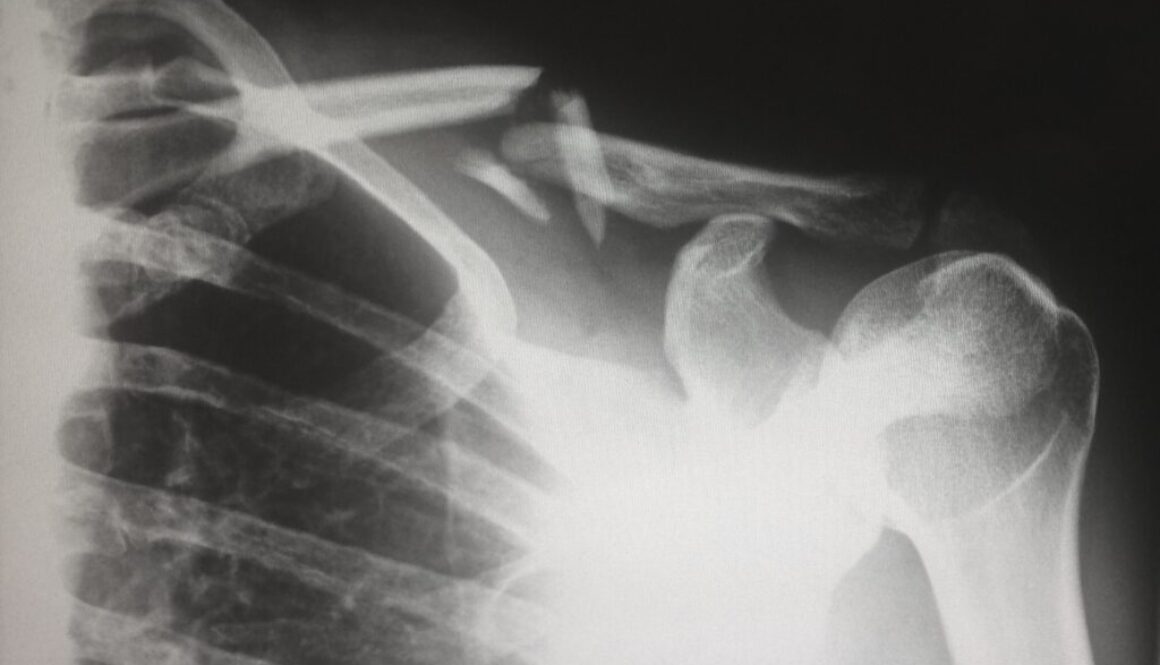
You’re in a groove, making moves and gains, and then suddenly out of no where. . .OUCH! Injury with a side of setback leaves you sidelined in your life, and throwing a massive wrench in your physical and mental game. I’ve heard and experienced this more times than I can count. If you’re like most (myself included) an injury brings everything to an immediate and painstaking halt. And I know you’re wondering, well what else can I do, other than stop? The answer: sooooo much more than we think! This is a long read, but stick with me, it will be worth it!
Too often we make our injuries and recovery way worse than it has to be. YES, you read that right. WE often worsen our own recovery process. You see, when we can’t do what we want to do and have been doing, we tend to just stop doing anything. And that’s the worst thing we can do. To make matters even worse, we often pair that with an increased dosage of bad food and beverage choices as a means to “sooth” our pain. BIG F’ing mistake!
My Injury Credentials
So what should you do?
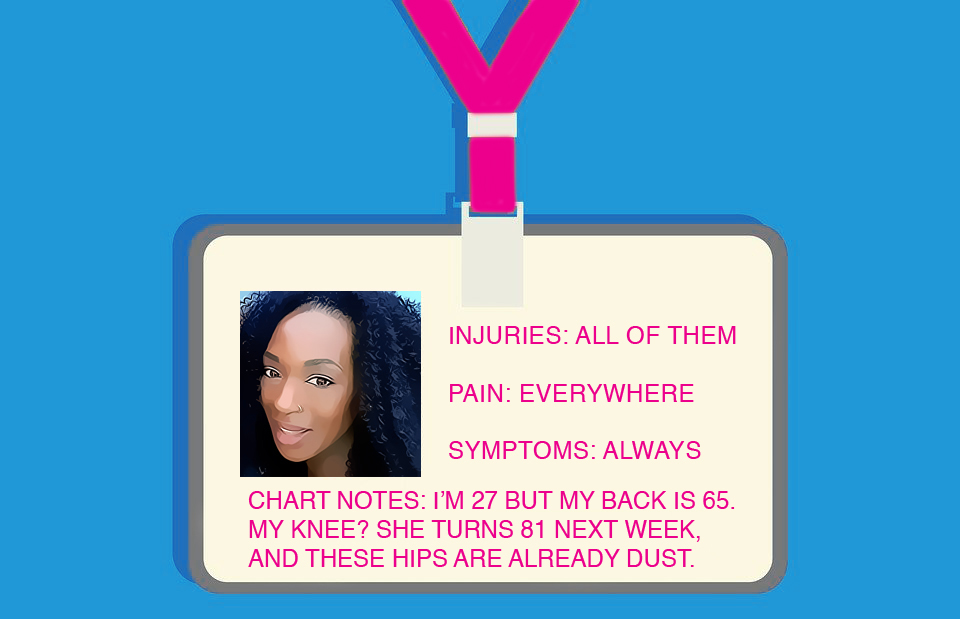
I’m glad you asked! Before I tell you, let’s back this up for a second and review my injury credentials (insert sad laugh here). I’m no stranger to injury and setback. I’ve had more than I care to count. 4 broken feet, foot surgery, a broken rib, a displaced knee, sprains, strains, concussions, partial rotator cuff tear, and bursitis in my hip. . .just to name a few. But let’s talk about the one that taught me the most: The Car Accident. . .
2017 was my year – 1st place win at PSO! 2018 I was still on a roll, having just earned my Pro card at USPDF, I was feeling unstoppable. In addition to being at the top of my pole game, I was also in the best shape of my life. Then November 28, 2018, in a matter of seconds. . .I lost it all. While driving to work, a car slammed into us instantly robbing me of all I had worked for and achieved. My right knee slammed into the dash sending a jolt of pain up my right side. My body whipped forward, my seatbelt snapped me back. The result? The entire loss of strength and range of motion in my right arm. I went from someone that could deadlift on a spin pole to barely being able to lift my arm up to dress or wave hi. Who knew that an accident with no blood, no deployed airbags, and that I literally walked away from could still cause so much damage to the body. WTF?!?!?
Was it my worst injury?
That’s hard to say when I’ve had so many injuries and setbacks. What I will say is that this was the one that I feel took the most from me. It completely stopped my career as a competitor, it impacted my teaching, it interfered with my workouts, and almost robbed me of my future – well at least that’s how I felt at the time. But it’s also the one where I learned the most, not just about myself and my body, but about rehab and recovery in general. So I’m sharing with you what I’ve learned about injuries, the recovery process and what you can do to help yourself not fall too far off the trail.
This post is a two-for-one serving of me trying to make some sense out of dealing with injury and setback, and letting those of you currently in this phase know that you’re not alone. And when I say injury, I mean any sort of a planned or unplanned setback that forces you on the bench for an extended period of time: this could also include a planned surgery or procedure, extended cold/illness, chronic migraines, chronic pain, pregnancy, etc.
Two Parts To Recovery
Recovery is made up of two parts: the mental and the physical. Both are equally important and must be nurtured in order to make a full recovery.
Let’s Get Mental
Often the mental aspect is the hardest part. However, it is also the key to an easier and quicker recovery. Negative emotions slow and clog the body, and generate more negativity. Don’t get me wrong, it’s frustrating when you’re forced to stop. Unable to practice, train, perform, and progress. And dealing with these feelings of frustration can make or break your recovery. It’s easy to say: “don’t let it get to you”, but we’re human. We feel. We suffer. We mourn. So cry your tears and shout your shouts, but then take a deep breath and remember that in time we will heal. So the sooner we get focused and committed to that healing, the closer we’ll be to it. Mind-body connection is real y’all! Mental healing is vita because when we take time to heal mentally, it positively enhances and supports your physical recovery. The body is a resilient and incredible machine that often comes back better and stronger IF you give it the right TLC. So here’s a few things you can do to help your mental recovery game:
• Use what you *think* you lost as a motivation to help you get it back.
• Focus your mind on your goals and what you can (still) do.
• Practice positive self-talk.
• Talk your feelings out to a trustworthy friend/family member, therapist or vent in a journal.
• Participate in activities that make you happy to help fight depression – which is a common, natural and nasty side effect to injury.
Do these things regularly and allow them to be the light in your life lighting the path of recovery to get you back to where you want to be.
Let’s Get Physical
The second part of recovery is the Physical journey. This is where the body mends and heals. This is where you need to be active and involved. So many times we just sit back like passengers on a road trip when it comes to our recovery. PASSengers are PASSive. . .don’t be! You must take an active interest in your recovery. Most doctors and rehab teams are concerned with getting you back to a baseline of functionality. However, for many, this is short of what you need for decent daily movement. And if you’re an athlete, aerialist, or live any sort of active lifestyle, then this seriously well below the standard of what you need for daily living. So here’s what you can do to be active in your physical recovery:
• Learn about your injury. Was there a root cause or was it a freak accident? If it was a freak accident, do you understand what the injury is? If not, ask ALL of the questions. Look up names of affected body parts (muscles, ligaments, tendons, organs, etc). Find out how the injury impacts your body, including what additional ailments and side effects it can lead to. If there was a root cause: faulty movement patterns, patten overload, cumulative injury cycle, lack of proper recovery practice, then these are things that need to be addressed before you hop back into your regular routine. If not, you’ll end up reinjured.
• Seek out specialists and second opinions in situations of surgery. Often there may be more solutions than the ones initially presented. Surgery isn’t always the best option, and it is a body-trauma of its own. You may even have to look outside of Western medicine. Holistic health is a game changer in many cases!
• Learn about the recovery and rehab. Often giving it time to heal and surgery are as far as doctor-patient care goes. However, I think rehab is essential for just about every injury. Sadly, it is something that is often not suggested, prescribed or required. And when it is offered or recommend, too often comes in the form of an outdated handout with stick figures in random stretches 👎🏽👎🏽👎🏽.
• Research any medications (prescription and over-the-counter) and supplements you may be required or desire to take.
• Talk to other people that have had the same injury. Find out about their experience, recovery, doctors/specialists, tools and any other feedback they are willing to share.
Another reason to get involved in your recovery is because not all care is equal. Doctors, surgical team, physio/rehab team, post rehab coach come in different levels of experience, know-how and helpfulness. There are so many things that affect the quality and amount of care that we get and have access to: insurance or lack thereof, sex, race, class, where you live, etc. So with these things playing a part in your recovery and care, it’s even more important to be involved.
Where I Went Wrong In The Past
Learn From My Mistakes
It’s so easy to blame my accident or past injuries for things like my weight gain, loss of flexibility and lost of skills, but the truth is my habits during my sidelined time really created the perfect opportunity for those issues to arise. I could have done better, and being a trainer myself (and a repeat offender), I definitely should have known better. The truth is, I kept eating the same amount of food, even though my body wasn’t doing the same amount of activity to handle or burn those calories. Eating more + moving less = weight gain. I also indulged in some sweet, comforting treats. My drinking also increased (tons of empty calories), because hey, what else am I supposed to do when I’m in timeout 🤷🏽♀️. A little bit of self control would have gone a long way. Take it from me, don’t try to sooth the pain and frustration of injury with what you put in your mouth – it will backfire and you will pay for it on the backend.
While most times I did continue my gym workouts in a modified and safe format, I wasn’t always working as hard as I could. I fell short on my personal flexibility, mobility and pole practice. And when I say fell short, I mean I basically ceased all solo practice. I learned no new skills/moves, taught only what my body already knew and demoed as little as possible. Even worse, I wasn’t told to rehab, so I didn’t. No wonder I regressed so much and basically felt like I was starting over each time.
Fast forward to Covid. While it wasn’t an injury, it was definitely a setback that sidelined us all. And with my shoulder still not 100% recovered, I’m team 🚫 NO new setbacks.🚫 So instead of falling back to old habits, I made it a point to continue my workouts to the best of my ability. I started my Quaranteam home-workout squad and limited my junk intake. I was able to keep off new weight, aka that “Quarantine-15” and even make some impressive strength gains. Knowing how I could make things worse, I opted to make things better for myself considering the circumstances. Even with so much out of our control, we must focus on the things that we do have control over.
How to Not Lose All Your Gains
Here’s what I’ve learned: • Heal fully. Don’t rush it. Broken bones, torn muscles, ligaments and tendons, anything with broken skin…these things take time to heal and there’s no way around that. Putting your body back in commission before its ready is like a baby being born to early. You’re not fully developed and strong, which can lead to further complications.
• Avoid emotional and excessive eating. Maintaining your gains is not just about working out. You want to avoid gaining pounds of unnecessary weight through poor eating habits simply because you can’t move like you want to. Our eating habits play a huge roll in how far setback can go. Injury recovery is a crucial time to keep (or start getting) your eating on track. What we aren’t able to do in exercise or our sport, we can partially make up for with better eating habits.This may require you to eat a bit cleaner than your used to, but it will be worth it in the end. It’s not about following a strict diet, it’s about making better choices during your recovery.
• Keep moving! Do the workouts and activities that you can do, even if it’s not what or as much as you normally do. For example, if you have a leg or foot injury, don’t just skip the gym entirely because you’re unable to do lower body workouts. Instead, focus on upper body workouts and when you can incorporate some no-to-low impact activities such as cycling, swimming or aerial yoga to get you back in the swing of things. Likewise, if you have a hand or arm injury, hit the treadmill or do some lower body and core work.
• Help your body heal by rehabbing on your own. Be sure to do all of the *helpful* rehab exercises you’ve been given or have thoroughly researched. Do them all and do them regularly. Ice, heat, therabands and SMR tools are priceless! (Check out my go-to tools.)
• Reintegrate slowly. Once you’re cleared to move and workout be sure to strengthen the injured area. A weak body part doesn’t pull its own weight and can lead to compensations, synergistic dominance, lack of balance and body synergy and more injury. It’s important to supplement your strength with stability & mobility in the injured area. Often stability and mobility work may need to come before strength work.
• Don’t start where you stopped. It’s important to recognize the effects of inactivity and how it will impacts strength, endurance and coordination. It’s unsafe to try and jump back into the level of training we were at pre-injury. So take the time to reconnect with your bodies and reconnect your bodies with skills. It would be even better to revisit the basics and reinforce your foundation. This will help awaken your muscle memory in a safe and supportive manner.
• Get a trainer. You’ll probably have to do some searching, but find a professional that specializes in or has some experience with your injury or injuries in general. You may also consider seeking out a post rehab specialist or a corrective exercise specialist (HINT: That’s what I do 🙋🏾♀️).Or at the very least, find a trainer that thinks out of the box and is willing to help you find creative and safe ways to work around your injury. I was lucky to find one early on that helped me safely work around my bodily disabilities. Trust me when I say it makes ALL the difference.
So there you have it. You might be injured, but all is not lost. You can limit losses, improve your recovery and make your body more resilient in the long run. If you’re injured or have just be benched for too long and are ready to jump back in but need help getting started give me a shout. I can help you figure out what you can do, what you should do and create a recovery and rehab plan to keep you in the game.